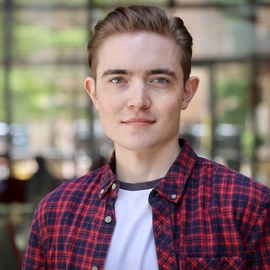
Jan Sobotka

Jan Sobotka

CS Master’s Student & AI/ML Research Assistant

Swiss Federal Institute of Technology in Lausanne (EPFL)

About me

My name is Jan, I am a master’s student in computer science at EPFL and a research assistant at the Autonomous Systems Group at the University of Texas at Austin, where I work on Large Language Models (LLMs) in strategy games.

At a high level, I am interested in understanding how our mind works and in building machines that can perceive, think, and learn. Practically speaking, my research focuses on reverse-engineering deep learning models to understand the internal mechanisms that give rise to intelligent behavior, how these mechanisms emerge during training, and why they break down in long-horizon or unfamiliar settings. I study neural networks both post-hoc and throughout training, linking training signals and optimization dynamics to the internal algorithms models form and the behaviors that follow. My goal is a scientific understanding that (i) enables principled training and architecture design, and (ii) yields insights into human learning and cognition.

I am always happy to discuss these topics, so if you have related thoughts or questions, please do not hesitate to contact me.


Interests
  • (Mechanistic) interpretability
  • Language models
  • Science of deep learning
  • Connections between AI and cognitive neuroscience
Education
  • Master's degree in Computer Science, 2024 - 2026

    Swiss Federal Institute of Technology in Lausanne (EPFL)

  • Bachelor's degree in Informatics, Specialization in Artificial Intelligence, 2021 - 2024

    Czech Technical University in Prague

Recent Publications & Preprints

(2025). MEIcoder: Decoding Visual Stimuli from Neural Activity by Leveraging Most Exciting Inputs. Conference on Neural Information Processing Systems (NeurIPS 2025).

PDF OpenReview

(2025). Weak-to-Strong Generalization under Distribution Shifts. Conference on Neural Information Processing Systems (NeurIPS 2025).

PDF OpenReview

(2025). Reverse-Engineering Memory in DreamerV3: From Sparse Representations to Functional Circuits. Conference on Neural Information Processing Systems (NeurIPS 2025, Spotlight at Mechanistic Interpretability Workshop).

PDF OpenReview

(2024). Enhancing Fractional Gradient Descent with Learned Optimizers. ArXiv.

PDF DOI

(2024). Investigation into the Training Dynamics of Learned Optimizers. 16th International Conference on Agents and Artificial Intelligence (ICAART 2024).

PDF DOI

(2024). Investigation into Training Dynamics of Learned Optimizers (Student Abstract). The 38th Annual AAAI Conference on Artificial Intelligence (AAAI-24).

PDF DOI